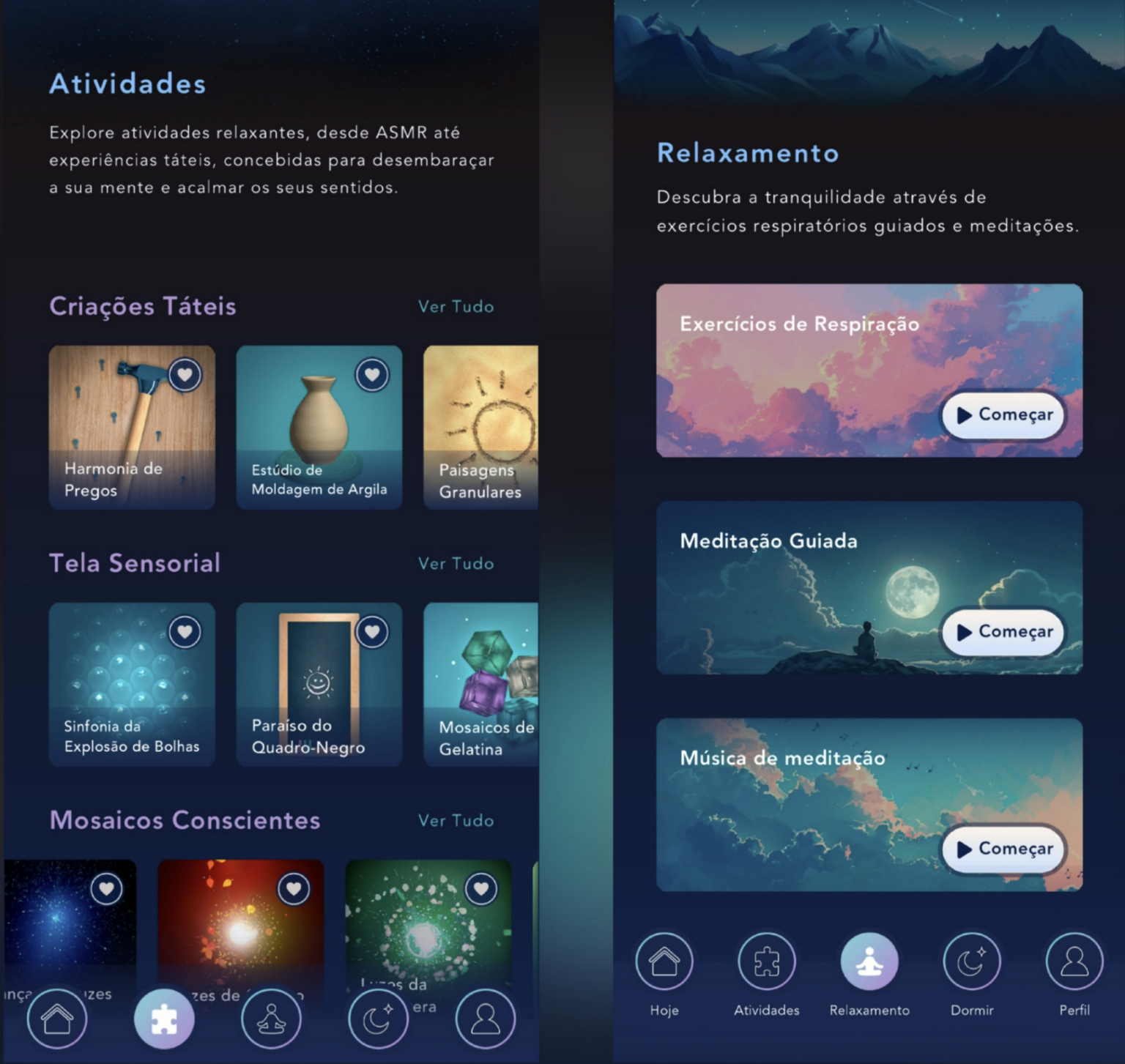
A study evaluating a mobile well-being application with informal caregivers received a best poster award at MobileHCI ’26, the 28th International Conference on Mobile Human-Computer Interaction, held in Swansea from 31 August to 3 September 2026. The work is by Beatriz Jardim Peres, Hildegardo Noronha, Pedro F. Campos and Élvio Rúbio Gouveia, all at ITI/LARSyS and the University of Madeira.
The study
Informal caregivers — people caring for a family member or friend with a chronic illness, disability or age-related condition — carry a well-documented psychological burden, and the digital tools aimed at them remain scarce. Rather than build another, the team evaluated an existing one: CHILL, a commercial mental health app offering guided relaxation, sensory activities, sleep audio and an AI conversational agent.
Ten caregivers took part, nine of them women, with an average age of 53. They had been caregiving for six years on average, most for a parent living with dementia. Each explored the app’s sections in a fixed sequence at their own pace, answering targeted questions after each, followed by a semi-structured interview. The responses were analysed thematically.
What it found
Engagement was selective rather than sustained, and strongly shaped by how participants happened to be feeling — which is itself a finding, since most of them valued the app precisely for not demanding a routine.
- Relaxation features worked best. Participants singled out the calming auditory design, and several were willing to fit these into daily routines.
- The AI agent divided opinion. Half found it accessible and non-judgmental; others found its responses lacking emotional depth.
- The activities section was weakest. Most participants found it repetitive and unclear, and asked for more structured, goal-oriented tasks.
The conclusion is measured: an app of this kind has potential as a stress-support tool for caregivers, but needs more adaptivity, clearer structure and richer multimodal content before that potential is realised. Whether it helps over months rather than minutes remains untested.
The work sits within the project’s research on innovation in health and wellbeing for resilience, and is an early output of that strand.