Autor: paulo.bala

  • Workshop: AI in health, wellbeing and sport — ethical, legal and social challenges

    G[ai]A-ALFA is hosting a half-day workshop on the ethical, legal and social challenges of artificial intelligence in health, wellbeing and sport. It takes place on Thursday 3 December 2026, from 09:30, at the Auditório da Reitoria — Colégio dos Jesuítas, in Funchal.

    The session brings the project’s work on ethical and sustainable AI — explainability, bias mitigation, and the environmental and social cost of the systems we build — into contact with the health and wellbeing domain, and asks what role sport and active citizenship play in using AI fairly. The invited speakers come from sport sciences and from sports law rather than from computing, which is deliberate: the questions on the table are not primarily technical ones.

    Programme

    09:30Reception and opening session
    09:45Presentation of the G[ai]A-ALFA project — Paulo Bala (ITI/LARSyS – ARDITI)
    10:20Keynote I · O corpo em jogo: humanismo, ética e desporto na era da IA (The body at stake: humanism, ethics and sport in the age of AI) — Rui Garcia, Faculty of Sport, University of Porto
    11:00Coffee break
    11:20Keynote II · Além do desempenho: Inteligência Artificial, dignidade humana e os novos desafios do Desporto (Beyond performance: AI, human dignity and the new challenges of sport) — Maurício Corrêa da Veiga
    12:00Participatory round table · Envolvimento cívico com IA na saúde, bem-estar e desporto (Civic engagement with AI in health, wellbeing and sport) — with Brício Martins de Araújo
    13:00Close

    Speakers

    • Rui Manuel Proença Garcia — Emeritus Full Professor at the Faculty of Sport, University of Porto, and an international reference in the sociology, anthropology and ethics of sport. He has supervised 41 doctoral theses and holds an honorary doctorate from the Universidade do Estado do Amazonas.
    • Maurício Corrêa da Veiga — Lawyer and postgraduate lecturer in Brazil and Europe, president of the Sports Law Commission of the Instituto dos Advogados Brasileiros, and a member of the Academia Nacional de Direito Desportivo. He writes on sporting autonomy, fundamental rights and labour relations in sport.
    • Brício Martins de Araújo — Lawyer and member of the Madeira Legislative Assembly, for several years president of the Madeira Regional Council of the Portuguese Bar Association, which awarded him its Medal of Honour.
    • Paulo Bala — Junior Researcher at ITI/LARSyS – ARDITI, working on human-computer interaction and extended reality in cultural heritage, health and sustainability.

    The workshop is held in Portuguese.
  • Study with informal caregivers wins best poster at MobileHCI 2026

    Study with informal caregivers wins best poster at MobileHCI 2026

    A study evaluating a mobile well-being application with informal caregivers received a best poster award at MobileHCI ’26, the 28th International Conference on Mobile Human-Computer Interaction, held in Swansea from 31 August to 3 September 2026. The work is by Beatriz Jardim Peres, Hildegardo Noronha, Pedro F. Campos and Élvio Rúbio Gouveia, all at ITI/LARSyS and the University of Madeira.

    The study

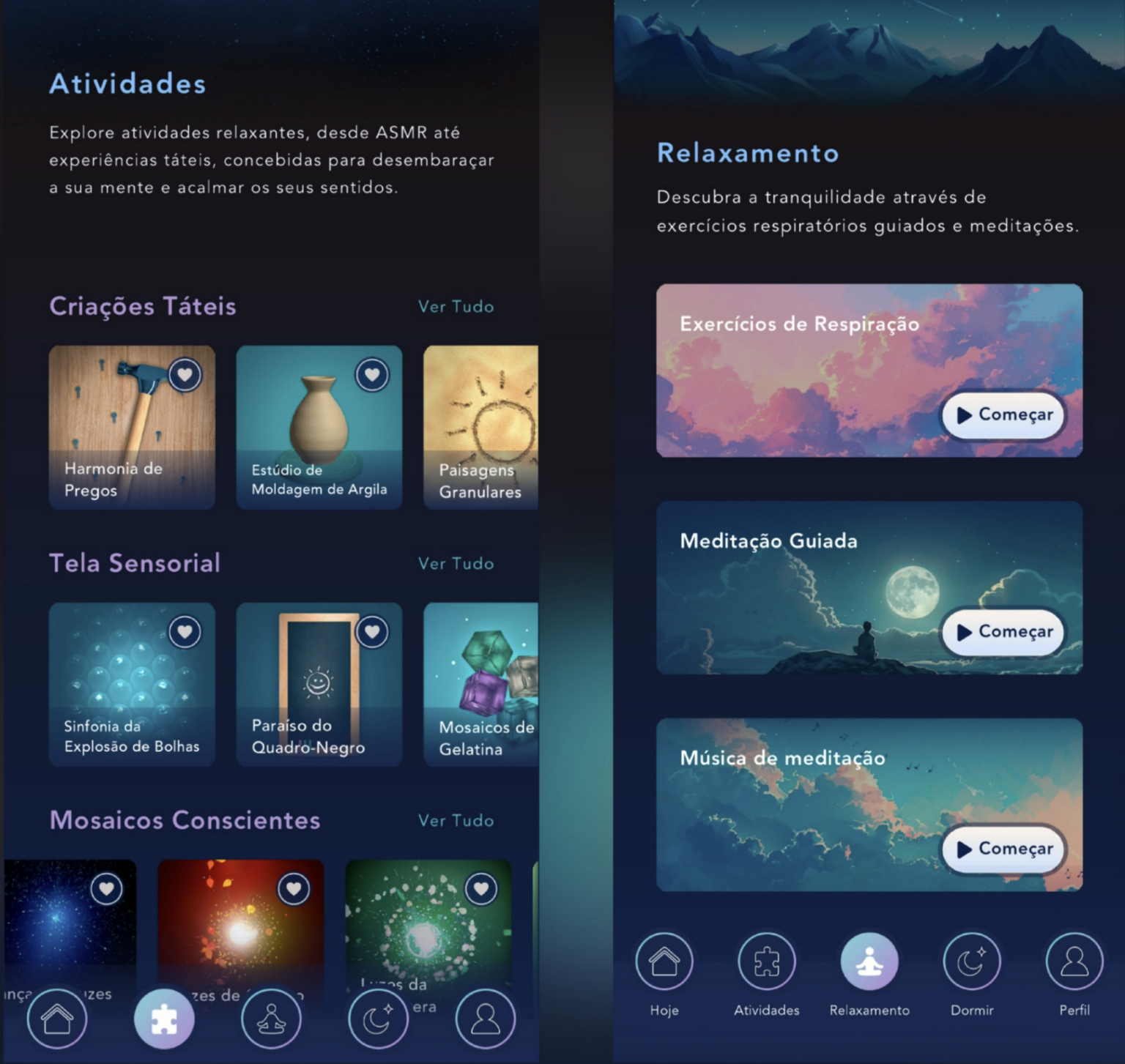
    Informal caregivers — people caring for a family member or friend with a chronic illness, disability or age-related condition — carry a well-documented psychological burden, and the digital tools aimed at them remain scarce. Rather than build another, the team evaluated an existing one: CHILL, a commercial mental health app offering guided relaxation, sensory activities, sleep audio and an AI conversational agent.

    Ten caregivers took part, nine of them women, with an average age of 53. They had been caregiving for six years on average, most for a parent living with dementia. Each explored the app’s sections in a fixed sequence at their own pace, answering targeted questions after each, followed by a semi-structured interview. The responses were analysed thematically.

    What it found

    Engagement was selective rather than sustained, and strongly shaped by how participants happened to be feeling — which is itself a finding, since most of them valued the app precisely for not demanding a routine.

    • Relaxation features worked best. Participants singled out the calming auditory design, and several were willing to fit these into daily routines.
    • The AI agent divided opinion. Half found it accessible and non-judgmental; others found its responses lacking emotional depth.
    • The activities section was weakest. Most participants found it repetitive and unclear, and asked for more structured, goal-oriented tasks.

    The conclusion is measured: an app of this kind has potential as a stress-support tool for caregivers, but needs more adaptivity, clearer structure and richer multimodal content before that potential is realised. Whether it helps over months rather than minutes remains untested.

    The work sits within the project’s research on innovation in health and wellbeing for resilience, and is an early output of that strand.

  • G[ai]A-ALFA workshop brings Coimbra and Lisbon researchers to Funchal

    G[ai]A-ALFA workshop brings Coimbra and Lisbon researchers to Funchal

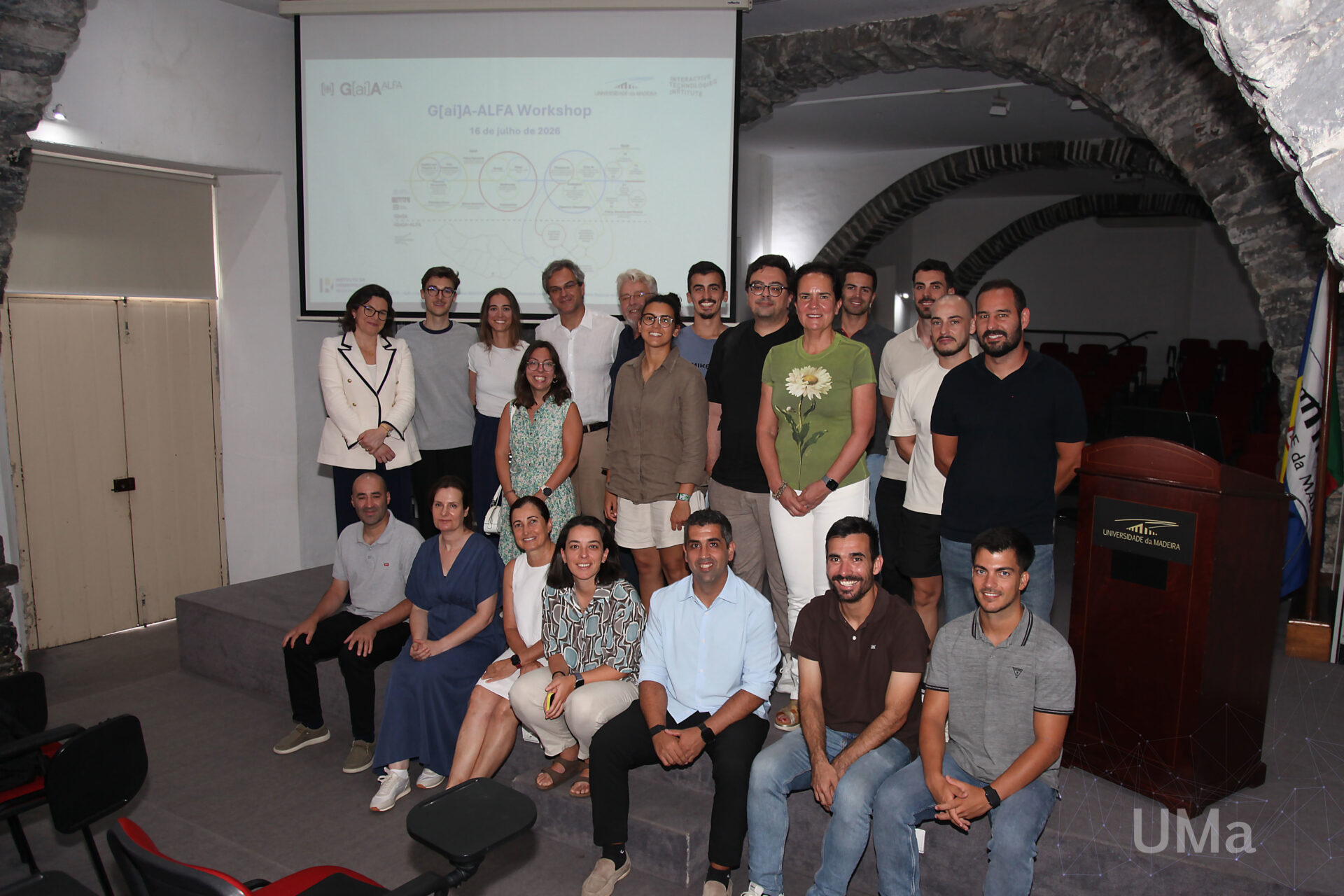
    Between 14 and 16 July 2026, G[ai]A-ALFA brought researchers from the University of Coimbra and the University of Lisbon to Funchal for three days of laboratory visits, fieldwork and scientific sessions. The workshop was organised by ITI/LARSyS at the University of Madeira, and closed with a round table given over to one question: where do these groups actually overlap to write proposals together?

    Three days, three settings

    The programme opened on Tuesday 14 July with a visit to the laboratories of the Department of Physical Education and Sport, hosted by Honorato Sousa and Guilherme Saldanha.

    Wednesday moved the group outdoors. A practical research activity on the Ponta de São Lourenço trail put the same measurements to work in the field, monitoring physiological parameters and external load along the route. Measuring a body at rest in a laboratory is one problem; measuring one on an exposed coastal trail, in July, is a noticeably harder one — and it is the problem the project’s health and wellbeing work aims to solve.

    The scientific sessions ran on Thursday 16 July at Sala Pátio I, in the Rectorate of the University of Madeira.

    The sessions

    • Élvio Rúbio Gouveia (UMa, ITI/LARSyS) — Research in Sports Technology and Well-Being: an Overview
    • Edmundo Monteiro (UC, FCTUC/CISUC) — Secure and Reliable Communication Infrastructures for Digital Health and Resilient Well-being Systems
    • Marília Curado (UC, IPN/CISUC) — Intelligent Networks and the Internet of Things for Digital Health: Resilience and Efficiency in Monitoring and Well-being Systems
    • Hugo Sarmento (UC, CIPER) — Artificial Intelligence for Performance Monitoring, Injury Prevention, and Well-being in Sports Systems
    • Adilson Marques (CIPER, FMH–UL) — Research on Physical Activity, Fitness and Mental Health

    Read in sequence, the five talks sketch a full pipeline rather than five separate interests: sensing and performance analysis at one end, the networks and security that carry the data in the middle, and population-level physical activity and mental health at the other. That is the shape G[ai]A-ALFA is built around, and seeing it assembled from four institutions in a single morning was the point of the exercise.

    What came out of it

    The closing round table — Mapping Synergies and Building Bridges for Joint Research Projects — set out concrete lines of collaboration, several of them feeding directly into the project’s work on innovation in health and wellbeing for resilience. The participants also agreed to prepare joint applications to national and European calls. Building scientific networks of this kind is one of the project’s stated aims, and it sits squarely within Madeira’s Smart Specialisation Strategy (EREI) — which is also why a regional project is worth connecting to groups in Coimbra and Lisbon in the first place.

    The University of Madeira published its own account of the workshop: Workshop G[ai]A-ALFA reforça sinergias para alavancar a investigação em tecnologia, desporto, bem-estar, saúde digital e IA na Madeira.

  • Calls open for 17 G[ai]A-ALFA research grants

    Three calls are open for research grants on G[ai]A-ALFA, all based at ITI/LARSyS at the University of Madeira — seventeen positions in total. Applications close on 29 July 2026.

    • BIPD/ALFAGAIA/2026 — three post-doctoral research grants
    • BI/ALFAGAIA/2026 — ten PhD studentships: five in computer and electrical engineering, five in design, sport sciences, health, psychology or related fields
    • BI/ALFAGAIA/2026/1 — four MSc studentships, split across those same two areas

    Eligibility, the full candidate profiles and the application procedure are set out in each call notice on the University of Madeira’s grants pages, in Portuguese.

  • G[ai]A-ALFA begins: applied AI research for an outermost region

    G[ai]A-ALFA begins: applied AI research for an outermost region

    G[ai]A-ALFA has begun. Over the next 36 months the project will develop applied artificial intelligence for challenges that an outermost region feels before the rest of Europe does: the energy transition, health and wellbeing, and citizens’ capacity to take part in decisions that technology increasingly shapes.

    The work is organised in four research pillars and seven activities, carried out by a multidisciplinary team at ITI/LARSyS – UMa spanning energy systems, digital health, human-computer interaction, design and the social sciences.

    What happens first

    The opening months are given over to recruitment and planning. We will be recruting postdoctoral researchers, PhD candidates and MSc students — alongside the first international mobility missions.